

Planning your time in Peru means balancing clear skies, fewer crowds, and how your visit fits into local rhythms. Traveling outside peak months can ease pressure on popular places while giving you more space to connect with everyday life and seasonal traditions.
What’s covered in this article:
- What is the best time to visit Peru?
- The climate in Peru
- Avoid the heavy rains in Peru
- Avoid the crowds when traveling to Peru
- Special events in Peru
- Conclusion
What is the best time to visit Peru?
The best time to travel to Peru is generally between May and October, when the dry season sets in across the Andes, bringing clear skies and stable conditions for exploring places like Machu Picchu and many other regions across the country. This period offers the most reliable weather for outdoor activities and generally more predictable travel logistics, although it also coincides with higher visitor numbers, especially from June to September.
Peru’s climate varies by region, but broadly speaking, Peru experiences a dry season from May to October and a wet season from November to April, with rainfall most noticeable in the Andes and the Amazon. During the wetter months, the landscape becomes lush and vibrant, and daily life settles into a different rhythm. You won’t encounter crowds, but face more challenging weather conditions. Travel in the Amazon becomes less predictable during this time, but Iquitos offers a very immersive experience shaped by the season. Meanwhile, the coast remains relatively dry year-round, adding flexibility to your route.
If you are looking for a balance of good weather, fewer crowds, and experiencing local life, the shoulder months, especially May and October, offer the most rewarding conditions across the country.
If you want to be prepared for shifting climates and travel conditions, take a look at our What to Pack for Peru guide, where you’ll find practical tips tailored to each region and season.
Quick overview of weather, climate, and festivals per month:
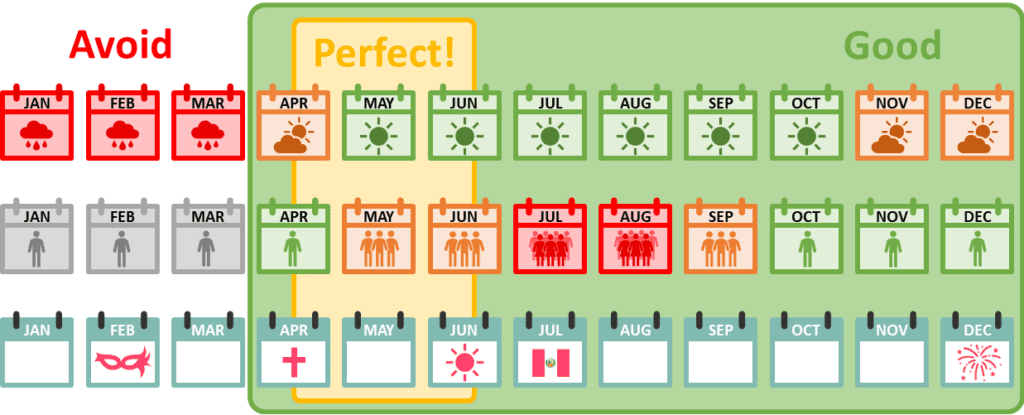
Overview of the best time to travel by region:
| Destination | Best time to travel | Why now? |
| Andes and Amazon | May, October (best balance). June–September (dry season) | Dry weather, fewer crowds in shoulder months, busier during peak dry season |
| Coast | October–November (quiet start). December–March (summer season) | Warmer weather, beach season peaks in summer months |
The climate in Peru

Peru lies in the Southern Hemisphere, so its seasons are generally opposite to those in regions like North America and Europe. Yet its proximity to the equator, combined with its remarkably diverse landscapes, creates a range of climates that goes far beyond a simple seasonal shift. In practice, you’ll find a constant interplay of wet and dry, warm and cool conditions, often within the same journey.
There are three main geographic regions, very different from one another: the coastal desert, the mountains of all kinds, and the hot, humid jungle. In Peru, the elevation ranges from 0 to 6.768 meters (0 to 22,200 feet). Below, we describe the climate in each of those areas separately.
Did you know, you can distinguish 32 different climate types worldwide?
– 28 of them can be found in Peru alone!
The Climate in the Peruvian Andes
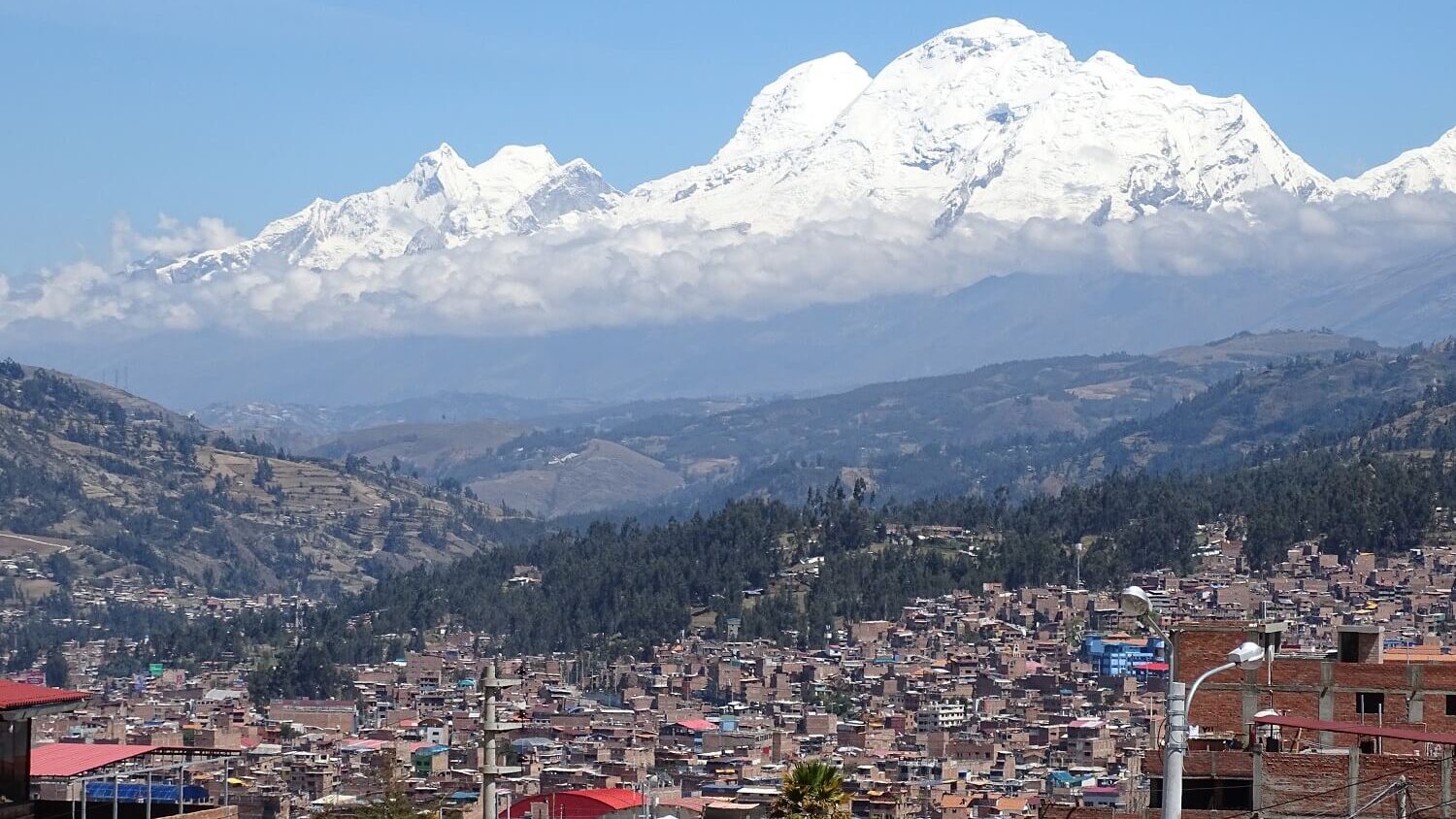
The best time to travel to the Andes of Peru is during the dry season, from May to October, when conditions are more stable for exploring many of the country’s well-known, but also lesser-visited regions. April and May can feel like a transition into this period, with lush landscapes, strongfull rivers, and waterfalls at their most vibrant. The rainy season typically runs from November or December through April, bringing heavier rainfall.
The dry season looks like this:
- There is hardly any rain, and you will enjoy clear blue skies most of the time.;
- During the day, the temperature is (very) pleasant, around 20 degrees.;
- However, it cools considerably in the evenings and at night; at altitudes above 3000 meters, temperatures can even drop below freezing.
The main tourism destinations in the Peruvian Andes are:
- Cusco, with the Sacred Valley and Machu Picchu
- Arequipa, with the Colca Canyon
- Lake Titicaca
- Huaraz, with its Cordilleras
- and Chachapoyas (although the latter is quite low in the Andes and has a very nice climate).
The Climate at the Coast of Peru
The climate in the coastal area of Peru is very different from the climate in the mountains. The coastal area consists largely of desert and is very dry year-round. In the capital Lima, no more than 10 millimeters of precipitation falls annually. From December to March, it is nice and sunny over there. In the other months, it is often foggy (mostly in Lima and south of it), and it can get really humid even when it doesn’t rain. It’s not a reason to avoid Lima and the Peruvian coast, though: it can be visited throughout the year.
The main destinations on the coast of Peru are:
- Lima
- The Southern Coast: Paracas, Ica, Nazca
- Trujillo & Chiclayo: the Moche Route
- The beach area around Máncora
The Climate in the Peruvian Jungle
The best time to travel to the Peruvian Amazon is generally between May and November, when rainfall is less intense, and conditions are easier for moving through the forest. The region has a hot, tropical, and humid climate year-round, with heavier rainfall typically between December and March. An exception to this recommendation is the northern Amazon around Iquitos, where higher river levels during the wetter months open up ways to travel deeper into the forest by boat.
Average temperatures in the Peruvian Amazon hover around 25°C (77°F), though days often feel hotter and nights cooler. During occasional cold fronts known as friajes, temperatures can drop to around 15°C (59°F), usually in June and July in the southern jungle. At other times, daytime temperatures can reach 37°C (100°F), so packing light clothing with an extra layer helps you stay comfortable as conditions shift.
The main tourism destinations in the Peruvian Jungle are:
| Friajes originate from polar air masses moving north from Antarctica and can cause noticeably cooler, windier, and sometimes overcast conditions in an otherwise hot and humid rainforest. They reach the Amazon basin of Peru from the south, bringing a temporary but considerable drop in temperature. These events usually last a few days and are most common during the austral winter months. |
Avoid the heavy rains
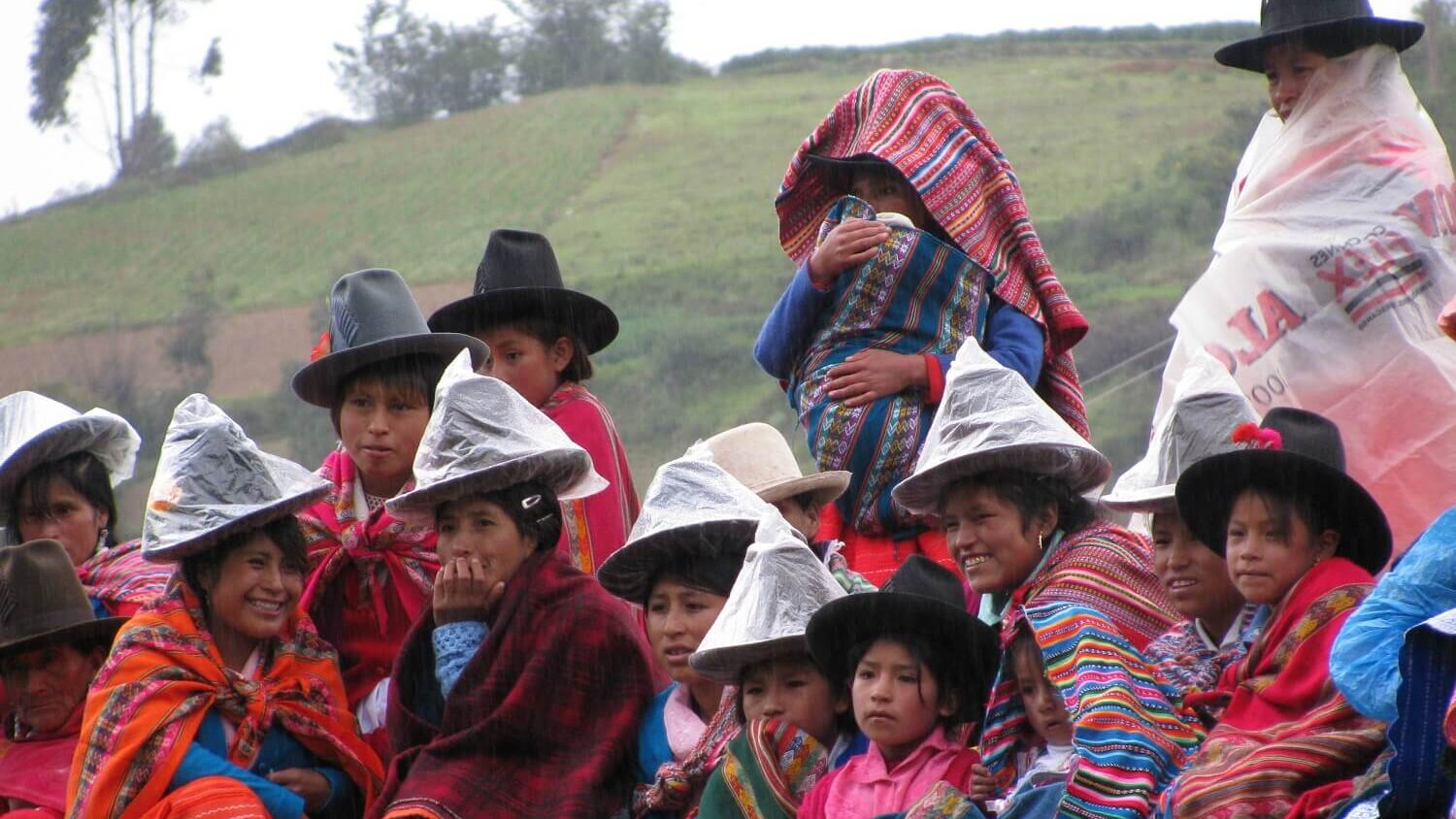
From December to March, Peru enters its rainy season, especially in the Andes and the Amazon. With it comes the need for flexibility. Showers can be frequent, and in some areas, heavy rainfall may affect transport, occasionally causing delays or changes. Leaving extra time between connections helps keep your journey smooth.
Rainfall in Peru is unevenly distributed, so some areas are spared. While the Andes and the Amazon can stay cloudy for days, the coast remains mostly dry. Places like Lima and Paracas sit in a desert strip where rain is rare. You can also head north to cities like Trujillo, Chiclayo, or Máncora, where the climate is often warmer and sunnier during these months.
If you really want to visit the Andes, consider adjusting your altitude instead of changing regions. Valleys tend to have milder conditions. The Sacred Valley often offers more stable weather than higher settlements, making it a good place for outings.
If you end up in a rainy area, see it as a chance to change your pace. Slow down, stay longer, and take part in everyday moments. Instead of limiting your options, rainy days redirect you toward experiences you might otherwise miss. And these spontaneous moments, to be honest, are often the most rewarding and memorable.
Avoid the crowds when traveling to Peru

The peak visitor months are July and August, with higher demand also stretching into June and September. These weeks align with holidays in Europe and North America, so popular routes and landmarks see the most visitors.
Southern Peru tends to be the most crowded. In contrast, northern regions receive fewer visitors year-round. Traveling to Northern Peru often comes with more basic infrastructure and fewer English speakers, but also more direct contact with local ways of life.
Generally speaking, April and October are great months to visit Peru, as they offer a good balance. You still find relatively stable weather, but fewer travelers on the main routes. The rainy months are even quieter, especially if you are open to adjusting your plans with the weather.
If you’ll visit during a busier period and still want to beat the crowds, try shifting your focus rather than your dates. Choose lesser-known regions, explore rural areas, or spend more time in smaller communities instead of major hubs. Traveling off the beaten path increases positive impact and opens space for more personal exchanges, even during the busiest months.

Special events in Peru

April: Easter
Easter is a special event in Peru and lasts quite a long time compared to celebrations in Western countries. The week of Easter is called “Semana Santa”. During this week, there are many parades and other activities, and you can enjoy festive celebrations and traditional dishes. This period may entail price increases in some destinations, as Peruvians also tend to travel quite a lot these days.
June 24th: Inti Raymi
One of the most important traditional fiestas in Peru takes place in Cusco: the Sun Festival. If you want to witness this celebration, you are not alone. Many tourists and Peruvians flock to Cusco for Inti Raymi, so prepare for big crowds (and since pickpockets may be present, please take only what you need and keep a close eye on your camera and other belongings).
July 28-29th: Fiestas Patrias
During Fiestas Patrias, Peru celebrates its independence. It’s a holiday you can witness all over the country. Parades, concerts, and other cultural activities are organized on many squares and in parks. The Peruvians (especially those from the big cities) tend to travel a lot during these days as well; it’s their main holiday of the year. They will visit relatives in the country’s interior or even travel to Peru’s highlights. In several destinations, these days will entail price increases. Please check with your travel designer for the latest information.
Other special events worth mentioning are:
- Fiesta de la Candelaria (in Puno, in February), a very colorful carnival festival.
- Paucartambo festival (in July, Cusco region, in the village of Paucartambo) honors their patron saint through masked dances, and music.
- Corpus Christi (celebrated big in Cusco, exactly 60 days after Easter Sunday). Many locals prepare 12 typical dishes on this day, which are part of this festivity.
- Quyllurit’i (often at the end of May or beginning of June, Cusco region), a high-altitude pilgrimage where Indigenous communities gather to honor spiritual traditions, blending devotion, music, and ritual.
- Of course, Christmas and New Year are important events in Peru, as well, with fireworks in most cities on both dates!
Conclusion: the right time for your itinerary
From mid-April to mid-June, Peru feels especially balanced. You’ll experience fresh, green landscapes after the rains, with clearer skies and fewer visitors. That said, travel between April and December can work beautifully too, as long as you stay open-minded concerning weather and busier periods.
We’re here to help you choose what fits you best.
We’re happy to guide you in finding the right travel window for your plans and pace. When you book a custom itinerary with Impactful Travel, you’ll receive tailored advice on the best time to go, what to pack for each region, how to travel responsibly, and what to expect day by day. Before you leave, you’ll connect with your travel specialist for a personalized briefing, and throughout your journey, our team will stay in touch via WhatsApp to support you on the ground.
Request your custom Peru itinerary and begin shaping a trip that reflects your interests and connects you with the people and places you’ll encounter.
FAQs about the Best time to travel to Peru
What are the benefits of traveling to Peru in the off-season?
Traveling off-season is a rewarding experience with lower costs, fewer crowds, and more insights into daily life and authentic encounters. It’s also a more sustainable way of traveling. It helps create income sources throughout the year, reduces pressure on local resources, and allows wildlife to follow more natural rhythms.
When should I book my flight to Peru?
We suggest booking your flight to Peru about 4 – 6 months in advance. If you are traveling in the high season, booking earlier is recommended, whereas low-season flights are cheaper and can often be booked more spontaneously. Try being a bit flexible with your dates, check nearby airports, and set up price alerts to monitor your options.
What is the best time to visit Machu Picchu?
Weatherwise, the best time to visit Machu Picchu is in the dry season from May to October. Try visiting at the beginning or end of the season to beat the crowds. The rainy season can offer a quieter, more mystical experience, as Machu Picchu emerges from behind the clouds (if so). Remember that “rainy season” doesn’t mean constant showers.
How much in advance should I buy Machu Picchu tickets?
Booking as early as possible is the safest approach, especially if you have specific dates or circuits in mind.
Tickets to Machu Picchu are released in stages. Sales usually begin in the second half of November for early January dates, with no new releases during December. The rest of the year becomes available gradually throughout January, and by the second half of the month, most dates are typically open.
For the Inca Trail, permits are released all at once in early January and must be booked through licensed agencies. With only 500 permits per day, including staff, spaces for trekkers are limited. As a result, popular months like May to September often sell out within hours or days, and many departures are fully booked by late January or February.