Costa Rica is world-famous for its rainforests, wildlife, and palm-fringed beaches. But there’s another side of the country that often goes unseen — its native culture. With approximately 2.4% of Costa Rica’s population identifying as indigenous, meeting these communities offers a deeper, more meaningful way to understand the country, its history, and its relationship with the natural world.
At Impactful Travel, we believe in tourism that has a positive impact on the people and landscapes that we visit. That’s why on our Costa Rica trips, we offer opportunities for travelers to engage with community-based tourism and meet Costa Rica’s indigenous communities. In this guide, we unpack more about the country’s indigenous people and how you can connect with them respectfully and ethically. If you have any questions as you read, don’t hesitate to get in touch with us.

Costa Rica’s Indigenous Communities
In Costa Rica, there are eight officially recognized indigenous groups. Each community has its own language, customs, and worldview, which are deeply connected to the landscapes they inhabit.
The Huetares, once the dominant group in the Central Valley, played a crucial role in shaping early Costa Rican society, although much of their language has been lost over time due to colonization. The Boruca people of southern Costa Rica are renowned for their striking masks, which tell stories of resistance, spirituality, and cultural survival.
The largest indigenous communities today are the Bribri and Cabécar, who live along the Caribbean coast and the Talamanca mountains. Both matrilineal societies, the Bribri and Cabécar continue to speak ancestral languages and practice traditions rooted in a spiritual connection to nature.
Other Indigenous groups include the Maleku, Térraba, Ngäbe, Chorotega, and Boruca, whom we visit on our trips. Despite centuries of colonization and modern pressures, these communities continue to preserve their languages, traditions, and worldviews.
The Connection Between Costa Rica’s Indigenous Cultures and Natural Landscapes
Costa Rica is often marketed as an eco-paradise, celebrated for its biodiversity. Yet focusing only on the wildlife and beaches risks overlooking the people who have lived in harmony with these environments long before national parks ever existed.
Indigenous cultures are inseparable from Costa Rica’s natural landscapes. Their understanding of forests, rivers, and ecosystems is based on generations of lived experience. This plays a critical role in environmental conservation, as many traditional practices promote biodiversity, sustainable agriculture, and forest protection. Long before conservation became a global movement, indigenous communities were practising it as a way of life!
If you’re interested in exploring these landscapes and spotting Costa Rica’s Most Incredible Wildlife, read our blog for tips on how to do so in collaboration with local communities.

Challenges Facing Costa Rica’s Indigenous Communities
Today, Costa Rica’s indigenous peoples face significant challenges. Land rights remain a pressing issue, with ongoing disputes over territories and the encroachment of land by ranches, farmers, and mining companies.
As a result of colonization, several indigenous languages have already been lost. More are still threatened, as Spanish is the dominant language in education, media, and daily life. Further pressures, such as isolation, economic challenges, limited access to healthcare, and environmental degradation, threaten these communities. Because of this, conscious travel becomes ever more essential for engaging with and supporting indigenous people in Costa Rica.
Tourism as a Tool for Cultural Preservation in Costa Rica
Tourism can be a double-edged sword for indigenous communities. When poorly managed, it risks commodifying culture, reinforcing stereotypes, and creating dependency. When done carefully, however, community-led tourism can generate income, strengthen cultural pride, and provide opportunities for people to share traditions on their own terms.
At Impactful Travel, we follow the model of community-based tourism, which ensures that experiences are designed, owned, and led by indigenous people themselves. This approach helps keep economic benefits within the community while safeguarding cultural integrity. For travelers, it also creates more meaningful, educational, and ethical experiences. You can learn more about it with our blog: Why Community-Based Tourism is the Future of Travel in Costa Rica.
Visiting Costa Rica’s Indigenous Communities Respectfully
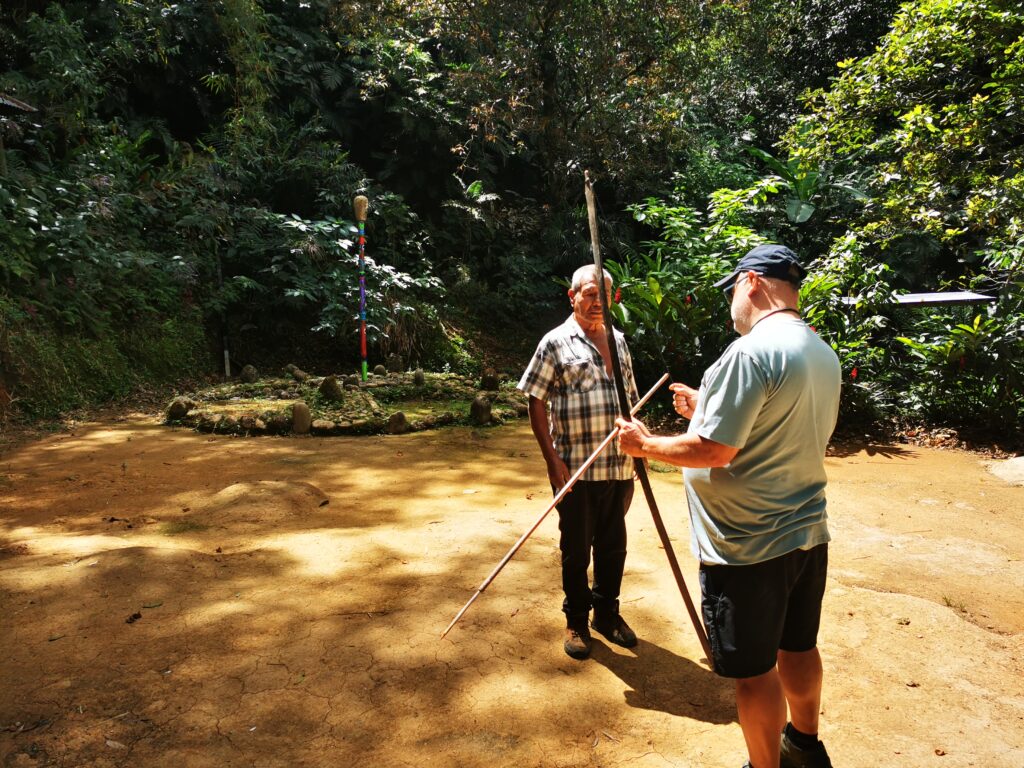
Visiting indigenous communities offers a deeper, more authentic perspective of Costa Rica, but it comes with responsibility. It’s important to approach the opportunity to engage with indigenous people with respect, humility, and a willingness to learn.
On our Costa Rica tours, we include visits to local indigenous communities that are rooted in community-based tourism. During our Hidden Gems of Costa Rica’s Caribbean Coast Tour, travelers can visit the Quitirisi Indigenous Reserve and meet the Huetar people, learning about their history and culture and partaking in a traditional clay workshop. And if you join our Authentic Costa Rica Tour, you’ll visit the Boruca community and have the opportunity to make your own ceremonial mask.

Tips for Meeting Indigenous People in Costa Rica
When visiting indigenous people or joining tours, we recommend keeping the following in mind:
- Always choose community-led or community-partnered experiences, where indigenous voices guide the narrative.
- Ask before taking photographs, and take time to engage in conversations rather than just observing. Showing genuine interest fosters respect and understanding.
- Buying crafts directly from artisans helps ensure fair income and supports the sustainability of traditional skills.
- Most importantly, approach each visit with humility. You are there to learn, not to consume!
Cultural Pride and Preservation with Impactful Travel
When pursuing ethical travel, we can support community resilience. The experiences on our Costa Rica trips not only celebrate cultural pride, but encourage the preservation of heritage, tradition, and ways of being. To see the country through the eyes of those who have shaped it for generations, you leave with a deeper understanding of what makes Costa Rica truly unique. If you have any questions about our tours or community-based tourism, don’t hesitate to get in touch with the Impactful Travel team.